Insurance built for grading & earthmoving contractors — the dirt, the fleet, and the crew.
General liability, workers' comp, commercial auto for dump trucks and equipment haulers, equipment floater and inland marine for excavators and bulldozers, builder's risk, umbrella, and surety bonds — purpose-built for grading and site-prep contractors. A-rated carriers. 15-minute quotes.
$2.4B
Contractor coverage placed — grading, earthmoving, and site-prep crews nationwide
NPN #8608479
Licensed all 50 states
- Licensed in all 50 states
- Founded 2005 — 20+ years
- Grading-knowledgeable agents
- 15-minute quote turnaround
- 2-hour claims response
- A.M. Best A+ carrier partners
Coverage built specifically for grading contractors.
Generic contractor policies undervalue a fleet that moves job to job, exclude off-site equipment, and cap the bonding line you need to chase real work. We build programs designed for dirt-work operations.
Not sure what you need? Get a coverage review
The coverage gaps that cost grading contractors the most.
Most agents hand an earthmoving company a generic contractor package and call it done. Then an excavator is stolen off a job site, a haul truck causes a serious accident, or a trench collapse hits — and the exclusion or undervaluation kicks in. We underwrite the parts of your operation everyone else leaves out.
Run by people who know dirt work
Contractors Choice Agency was founded in 2005 by people from the trades. We've walked job sites, valued yellow iron, and know what an excavator or a scraper fleet costs to replace — and what a bonding line means to a contractor chasing bigger work.
General liability that clears the GC's checklist
Every general contractor, developer, and municipality requires GL before you mobilize. We structure GL — with additional insureds, waivers of subrogation, and primary wording — that actually passes the contract review.
Equipment floaters for a fleet that moves
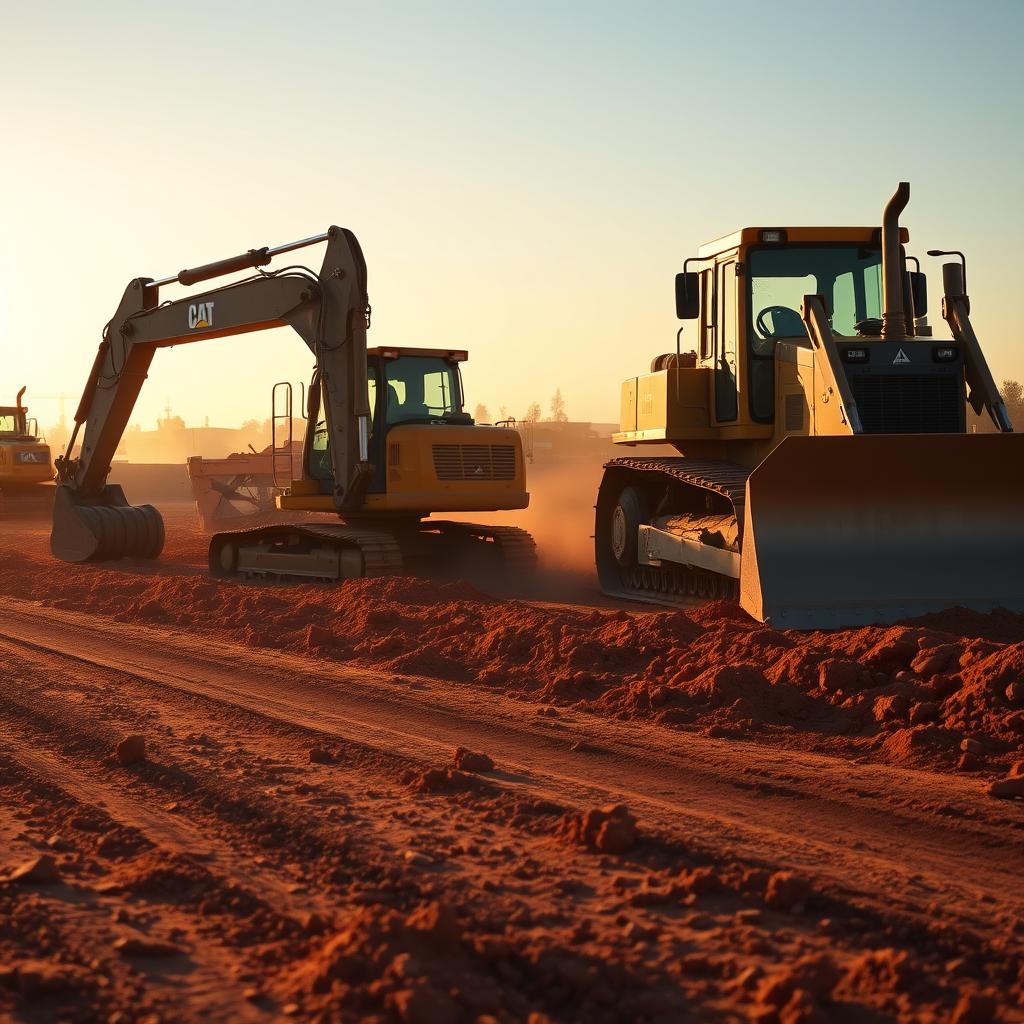
Standard property excludes equipment off-premises. An equipment floater (inland marine) covers your excavators, dozers, graders, and scrapers in transit, on-site, and staged overnight — valued at real replacement cost.
Commercial auto built for hauling exposure
Dump trucks, lowboys, and equipment haulers carry serious third-party exposure. We place commercial auto with adequate limits and umbrella above it — not a personal auto form or a farm policy.
Surety and bonding that scales with you
A single one-off bond caps the work you can chase. We build a bonding line — bid, performance, payment, and maintenance — based on your real work-in-progress and financials, so you can qualify for bigger jobs.
We place the hard contractor risks
Been declined over a prior loss, a poor experience modifier, or high-hazard dirt-work class codes? We have E&S and specialty markets for grading contractors others won't touch.
Run by a former contractor
Josh Cotner knows how job sites work and what happens when coverage fails at claim time — on the dirt and off. Real operator knowledge, not a call-center quote.
From quote request to bound policy in about a day.
No two-week back-and-forth. A real conversation, real markets, and a program you can actually understand — built around your fleet, your crew, and your bonding needs.
Tell us about your operation
15-min call or form. Crew size and payroll, equipment list and fleet value, scope of work (residential, commercial, civil), and the coverage lines your old carrier excluded or capped.
We shop specialty contractor markets
Niche markets that actually write equipment floaters, dump-truck auto, and contractor surety — not generic package markets that carve them out.
Bind a program built for dirt work
GL + workers' comp + commercial auto + equipment floater + builder's risk + umbrella + surety, coordinated so there are no gaps across your crew and fleet.
Claims support that moves fast
When an equipment theft, a haul-truck accident, or a trench-collapse claim arrives, you reach a person with context — not a queue. 2-hour response.
Or call 844-967-5247 — usually answered live.
Grading contractor coverage. All 50 states.
From Phoenix and Dallas to Denver, Atlanta, and the high-growth corridors of the Mountain West and Southeast, Contractors Choice Agency writes grading and earthmoving insurance in every state where dirt is being moved.
- Phoenix & Tucson, AZ — Arizona home market — desert grading, pad building, ADOT work
- Dallas–Fort Worth, TX — Texas — master-planned communities, TxDOT performance bonds
- Denver & the Front Range, CO — Colorado — foothills site prep, CDOT, wildfire-related land work
- Atlanta, GA — Georgia & the Southeast — red-dirt hauling, GDOT bonding
- Nashville, TN — Tennessee — TDOT bonds, limestone and rock grading
- Raleigh & the Carolinas — NC & SC — Piedmont rock grading, NCDOT/SCDOT bonding
- Salt Lake City, UT — Utah & Mountain West — UDOT, mountain-valley site prep
- Boise, ID — Idaho & PNW — ITD bonding, basalt and high-desert grading
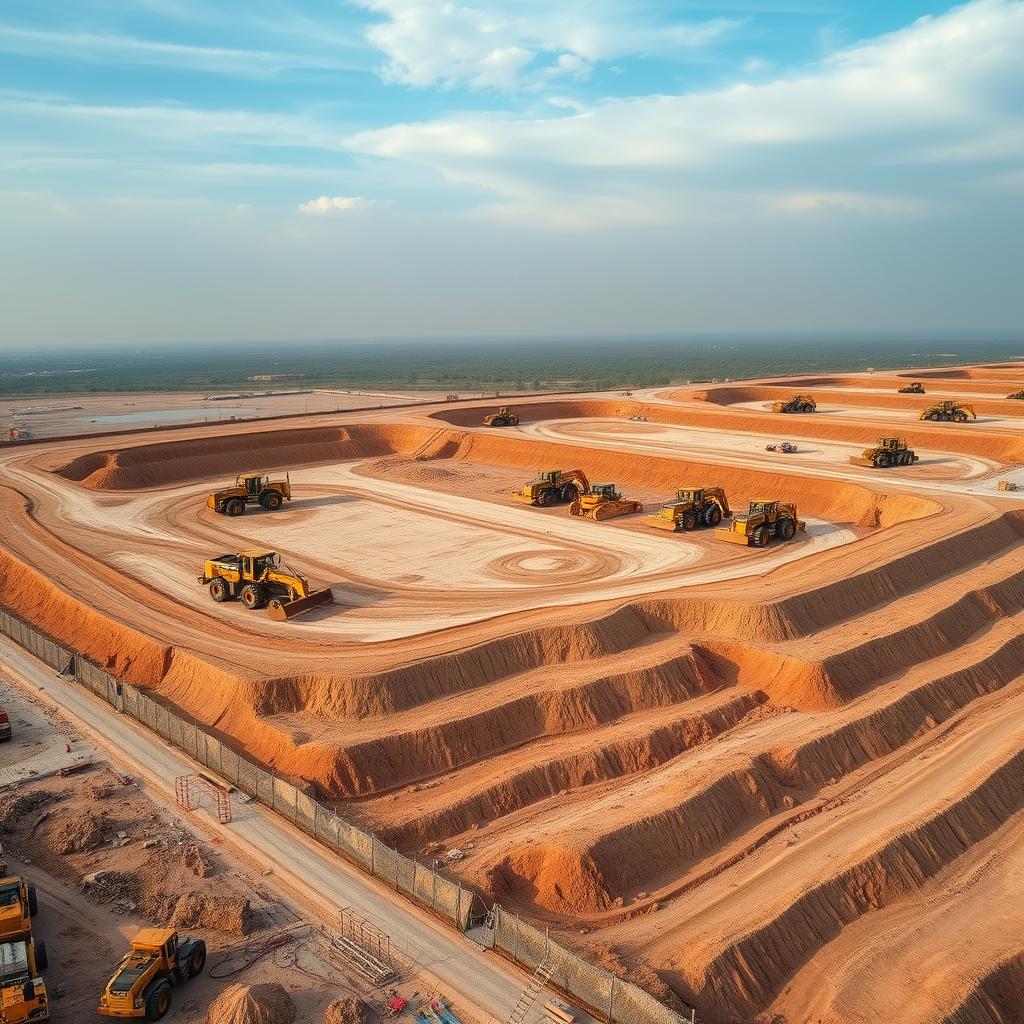
National coverage for grading & earthmoving contractors.
Writing contractor programs in all 50 states since 2005.
0+
Years insuring specialty contractors
0 min
Average quote turnaround
0 hr
Claims response
0
States licensed & writing
Grading contractor insurance, in plain English.
A grading contractor's core insurance program typically includes general liability (for third-party property damage and bodily injury), workers' compensation (required by law if you have employees), commercial auto (for trucks and equipment haulers), and inland marine / equipment floater coverage (for excavators, dozers, and other machines on job sites). Larger operations or those bidding on public projects will also need umbrella / excess liability insurance and surety bonds. The exact mix depends on your state, the size of your operation, and the types of projects you take on.
Total insurance costs vary significantly by operation size, but a small grading contractor with 3-5 employees, $600k-$900k in annual revenue, and $500k in equipment can typically expect to spend $20,000 to $40,000 per year across all coverage lines. General liability runs $1,500 to $4,000 per year for smaller operations; workers' comp is priced per $100 of payroll under NCCI code 6217 and is usually the largest single cost; inland marine runs 1-2% of fleet value annually. Factors that drive cost up include prior claims, high-risk geographic areas, underground utility work, and a high experience modification rate (EMR) on workers' comp.
Grading and excavation work is classified under NCCI class code 6217 (Excavation Work), which covers earthmoving, trenching, grading, cut and fill operations, and related site work. Code 6217 carries one of the higher base rates in the construction trades, reflecting the elevated injury risk of operating heavy equipment and working in and around excavations. Misclassifying grading employees under lower-rated codes is a common audit trigger — carriers audit payroll annually and will back-bill at the correct rate if employees are found in the wrong class.
Yes — a commercial general liability (CGL) policy written for excavation or grading operations covers third-party bodily injury and property damage arising from utility strikes, including repair costs, emergency response costs, and consequential losses like business interruption from a severed fiber or power line. The key requirements are that your policy is rated for excavation-class operations (not a standard contractor package with utility exclusions) and that your policy language includes 'loss of use of tangible property' as a covered damage — this is what makes telecom and utility disruption claims payable. Failure to call 811 before digging can create coverage complications and should always be avoided.
Inland marine insurance — also called an equipment floater — is the coverage that protects your grading equipment (excavators, bulldozers, motor graders, compactors, and attachments) against physical loss wherever the machines are located, including on job sites, in transit, and in storage. It covers theft, vandalism, fire, overturn/rollover, accidental damage, and usually flood. It does not cover mechanical breakdown or wear and tear, which requires a separate equipment breakdown policy. Rates typically run 1-2% of the insured fleet value per year.
An equipment floater (a type of inland marine policy) insures mobile equipment — excavators, bulldozers, motor graders, scrapers, compactors, skid steers, and attachments — wherever it works: in transit on a lowboy, staged on the job site, or parked overnight. Standard property policies exclude equipment once it leaves your premises, so if your excavator or fleet moves from site to site, you need an equipment floater to actually insure it.
Most grading contractors need at least a license bond, which is required by state contractor licensing boards in the majority of states as a condition of holding a contractor's license. Contractors pursuing public projects — highway work, municipal site prep, government facilities — will additionally need performance and payment bonds, which are required by the Miller Act (federal) and corresponding state Little Miller Acts for public contracts above threshold amounts. Some private project owners and general contractors also require performance bonds on larger subcontracts.
A rollover (overturn) on a job site triggers two potential coverages. If the machine is physically damaged, your inland marine / equipment floater covers the repair or replacement costs as a collision/overturn loss — subject to your deductible. If the rollover injures an employee, your workers' compensation policy responds to the medical and wage replacement costs. If the rollover causes damage to a third party's property (neighboring land, a structure, underground utilities), your general liability policy responds. Having all three coverages in a coordinated program is essential — a single rollover event can trigger claims under all three lines simultaneously.
Builder's risk insurance is typically required on projects where structures are being built or rehabilitated, not on pure grading and earthmoving projects. However, grading contractors working as subcontractors on a larger construction project may be asked to enroll in or contribute to the project's builder's risk policy. On site preparation projects that include underground drainage structures, retaining walls, or site utilities, the project owner or GC may specify builder's risk requirements in the subcontract. Always review your subcontract agreements carefully — they determine whether builder's risk applies to your scope and who is responsible for purchasing it.
Grading and earthmoving contractors face a distinct risk profile that general contractor insurance packages aren't always designed to address. The key differences include: (1) GL classification — grading work is rated as excavation-class, not general construction, which affects policy pricing and ensures coverage responds to underground damage claims; (2) equipment exposure — grading fleets are high-value and mobile, requiring a purpose-built equipment floater rather than a generic tools-and-equipment endorsement; (3) NCCI workers' comp code 6217 rather than general carpentry or construction codes; and (4) the absence of certain exclusions (like underground property damage exclusions) that sometimes appear in standard GC package policies. A policy written for a framing contractor or general superintendent is often inadequate for grading work.
Multi-state grading operations require careful attention to coverage geography across all policy lines. Your workers' comp policy must list all states where employees work under Part Three of the standard policy — employees injured in unlisted states may face coverage complications. Your general liability policy should cover operations in all active states, with no geographic exclusions. Commercial auto must comply with the minimum financial responsibility requirements of each operating state. Surety bond requirements vary by state and may require separate bonds for each jurisdiction where you hold a contractor's license. Work with an agent experienced in multi-state contractor placements to ensure no gaps.
Grading and excavation contractors face pollution exposures that standard GL policies typically exclude. Disturbing contaminated soil, encountering underground storage tanks (USTs), releasing diesel fuel or hydraulic fluid from equipment, or redirecting sediment into waterways can all trigger pollution-related claims that standard GL will not cover due to the 'absolute pollution exclusion.' Contractors of Pollution Liability (CPL) or a Pollution Legal Liability (PLL) endorsement provides coverage for these claims. If you work on brownfield sites, near industrial properties, or on projects where soil contamination is a possibility, pollution liability is strongly advisable — not optional.
Equipment breakdown insurance (also called boiler and machinery or mechanical breakdown insurance) covers sudden and accidental failure of mechanical, electrical, or hydraulic systems in your equipment — pump failures, transmission failures, hydraulic system failures, and similar mechanical events that your inland marine policy specifically excludes. For grading contractors with high-value equipment — excavators worth $200,000-$500,000, motor graders over $300,000 — a single mechanical breakdown can produce a repair bill of $30,000 to $80,000 or more. Equipment breakdown insurance fills this gap and is generally available as an endorsement or separate policy at relatively modest cost.
Workers' comp premium for grading contractors is calculated by multiplying your total payroll (in hundreds) by the NCCI class code 6217 base rate for your state, then applying your experience modification rate (EMR). For example, $500,000 in payroll at a $12.00 rate per $100 of payroll produces a $60,000 manual premium; with an EMR of 0.90, your actual premium would be $54,000. The base rate varies significantly by state — high-cost states like California and New York can run 2-3x the rates of lower-cost states. EMR is recalculated annually by NCCI using your three-year loss history and is the primary factor within your control for managing workers' comp cost.
General contractors typically require grading subcontractors to carry minimum GL limits of $1,000,000 per occurrence / $2,000,000 aggregate, with the GC named as an additional insured. Many commercial GC contracts — especially on larger projects or with national GC firms — now require $2,000,000 per occurrence / $4,000,000 aggregate, or require an umbrella policy that brings total limits to $5,000,000 or higher. Workers' comp limits are typically set at statutory limits with employer's liability of $500,000/$500,000/$500,000 or $1,000,000/$1,000,000/$1,000,000. Always review the subcontract insurance requirements before bidding — being unable to meet certificate requirements after award is a costly situation.
Yes — your general liability policy covers third-party property damage caused by your operations, including damage to a neighboring property from your equipment. If your bulldozer damages a neighbor's fence, your excavator undermines an adjacent foundation, or your grading redirects stormwater that floods an adjacent property, GL responds to the third-party property damage claim. The GL policy covers these claims up to your per-occurrence and aggregate limits. Your inland marine policy covers damage to your own equipment — it does not cover third-party property. Make sure your GL limits are adequate for the scale of property values adjacent to your typical job sites.
A performance bond is a surety instrument that guarantees you will complete a contracted project in accordance with the contract terms and specifications. If you fail to perform, the surety arranges or funds project completion and then seeks reimbursement from you. Grading contractors typically need performance bonds when bidding on public projects — they're required by the federal Miller Act on federal contracts over $150,000, and by state Little Miller Acts on state and local public contracts. Large commercial project owners and developers may also require performance bonds on significant private contracts. Performance bonds are priced at 1-3% of the contract value, depending on your financial strength and surety relationship.
If you have active insurance policies in place, a certificate of insurance (COI) can typically be issued within a few hours of request — most agents can turn these around same-day. If the project owner or GC requires additional insured endorsements, completed operations extensions, or special certificate wording, those may take 24-48 hours depending on the carrier. The most common cause of delay is a contract that requires non-standard additional insured forms or policy language the carrier must review and approve. For projects with imminent start dates, contact your agent as early as possible and share the subcontract insurance requirements section so the COI can be prepared to meet specifications.
Completed operations coverage is a component of your general liability policy that extends coverage for third-party bodily injury and property damage claims that arise after a project is finished and you have left the site. For grading contractors, this matters because drainage failures, erosion problems, and improper compaction can cause damage months or years after project completion — long after you've moved on to other jobs. Completed operations coverage is included in the aggregate limit of most standard CGL policies, but the aggregate applies across all completed operations claims. Contractors with significant project volumes should verify that their completed operations aggregate is adequate, and should not allow this coverage to lapse when a policy is not renewed.
Yes — a single prior utility strike claim does not automatically disqualify you from general liability coverage, but it will affect your underwriting and pricing. Carriers will want to understand the circumstances of the claim: Was 811 called? Were locate marks followed? What corrective procedures did you implement? A well-documented single claim with strong pre- and post-loss compliance records may result in a moderate rate increase (10-30%) but continued standard market coverage. Multiple utility strike claims, or a claim combined with evidence of poor locate compliance, will push your placement into specialty or surplus lines markets at higher rates. Full disclosure of prior claims is required — failure to disclose is grounds for policy rescission.
Protect Your Grading Operation with coverage built for the dirt.
Whether you need general liability today or a full program — workers' comp, commercial auto, equipment floater, builder's risk, umbrella, and surety bonds — one call gets you real quotes from specialty contractor markets. Not a voicemail and a two-week wait.
No obligation. No spam. Licensed all 50 states.